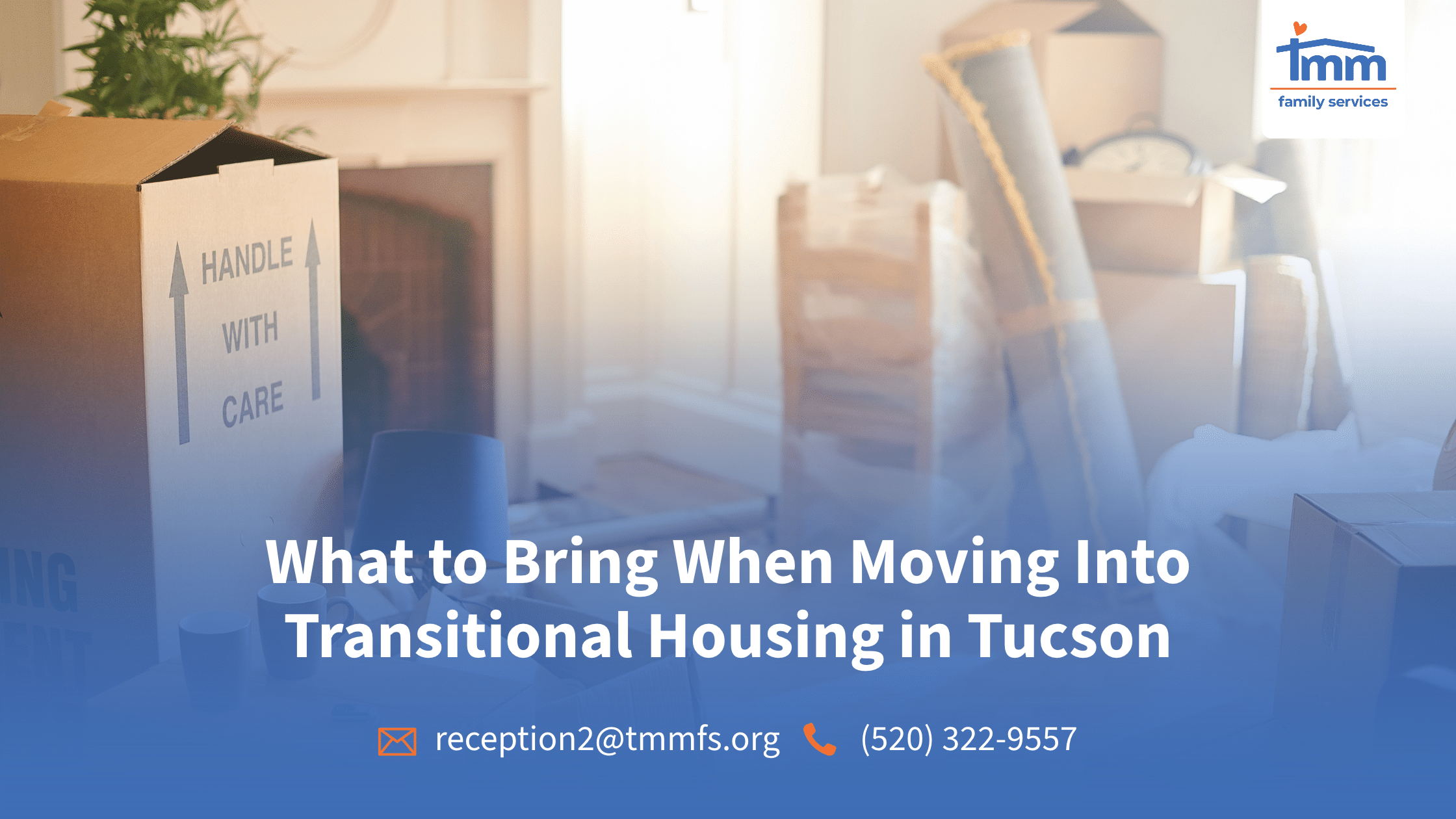
Bring your ID and key papers, a week or two of clothes, your medications, basic toiletries, and a phone with a charger. Pack proof of income and any program paperwork too, and leave bulky things behind until you know what your unit already has. Every transitional housing program in Tucson has its own rules, so ask yours for a packing list before move-in day.
Packing for a move you didn’t plan is stressful. You might have a few days, or only a few hours, and everything you own has to fit in a couple of bags. Take a breath. You don’t need to bring your whole life. Just bring the things that are hard to replace and the things you’ll use every day.
At a glance:
- Papers: Photo ID, Social Security card, birth certificates, proof of income, benefit letters
- Daily needs: Clothes for 1 to 2 weeks, toiletries, shoes, a jacket
- Health: Medications, prescriptions, insurance cards, glasses
- Kids: School records, immunization papers, comfort items, a few toys
- Tech: Phone, charger, important phone numbers written down
What Documents Should You Bring?
Your papers are number one. They are impossible to reproduce, and it may take time to get new copies. Store them in one place and always keep them close to you. Do not store them in bags that may be put into storage.
Take with you everything from this list:
- A government photo ID for each of your adults
- Social Security cards
- Birth certificates for all the members of your family
- Evidence of income (paychecks, benefit letters, or an award letter)
- Recent bank statements, if possible
- Rental history and phone numbers of past landlords
- Any documents provided by the agency or program that referred you
- Court papers about custody, if you have any
- DD 214 (Veteran discharge papers), if you are a veteran
- Your vehicle registration, insurance information, and your driver’s license
Can you not find all the documents? It is okay. Inform your program as soon as possible. Staff will help you obtain new copies, and they may accept other evidence in the meantime.
Here is some very useful advice for you: make pictures of each paper and send them to your personal e-mail address. This way you will always have copies of the lost documents.
What Clothing and Personal Items Do You Need?
Pack light, but pack with some thought. Plan on one to two weeks of clothes you can mix and match.
- Underwear and socks for 7 to 10 days
- Work clothes or interview clothes, if you’re job hunting
- Everyday clothes and one nicer outfit
- Comfortable shoes you can walk in
- A jacket or sweater, because Tucson nights can get cold in winter
- Sunglasses and a hat for the summer heat
- Pajamas and slippers
Then add the things you use every single day:
- Toothbrush, toothpaste, and floss
- Soap, shampoo, deodorant, and a comb or brush
- Razors and feminine hygiene products
- A small towel, in case the program doesn’t supply them
- Glasses, contact lenses, or hearing aids, along with their cases
What About Medications and Health Papers?
Don’t leave these behind. Bring all your current medications in their original bottles, plus a written list of what you take and when. If you can, bring a few extra days’ supply and your prescription details so a pharmacy can help you refill.
Also pack:
- Health insurance or Medicaid cards
- Phone numbers for your doctor and clinic
- Immunization records, especially for children
- Medical equipment like inhalers, glucose monitors, or braces
If you take a medication that needs to stay cold, tell your program right away so they can plan storage.
What Should You Pack for Kids?
They might not need much for your child to feel comfortable away from what they have known all their life; something that makes them think of home might help. Pack with them:
- Report card/school record
- Toys/Books that they like
- Blanket/pillow that they adore
- Clothing that they could use for attending school and playing
- Dietary restrictions information
- School backpack
Reach out to your program to learn how to register your children at school using your new address. Under federal law, children living in transitional housing have the option to stay at their current school or start at a new school immediately.
What Should You Ask Before You Pack?
Every program runs a little differently, and one phone call can save you from hauling the wrong things. Here’s what to ask:
- Are bedding, towels, and kitchen items provided?
- Can I bring a pet, and what are the rules?
- How much storage do I get?
- Are there items I can’t bring?
- What are the check-in times and house rules?
- Is there a curfew or a guest policy?
- Can I bring a car, and where can I park it?
If something isn’t allowed, ask if you can leave it somewhere else, like with a friend or a family member, until you move into a permanent home.
Where Can You Get Household Items If You Don’t Have Any?
You don’t have to buy everything new. Many people start with secondhand items and build up slowly. TMM runs a ReStore and a Community Closet where you may find affordable furniture, clothing, and household basics. Call first to see what’s in stock.
What Should You Not Bring?
Typically, all programs will have a short list of prohibited items. Most commonly, these include firearms, illicit drugs, and even some household appliances. Each program has its own regulations; be sure to check yours. It is also recommended that you keep expensive jewelry and any cash secure elsewhere.
What Else Can Make Moving In Easier?
Here are some simple practices that can make life in the first week a lot simpler:
- Keep important phone numbers written on paper. Your phone can run out of battery, but not paper.
- Carry a small notebook with you to write down appointments, job prospects, and questions for the staff.
- Keep some cash handy for doing laundry, catching a bus, or buying food.
- Pack a small bag with everything you need at a moment’s notice. Include your paperwork, medication, and charger.
- Let the staff know about your needs. They cannot help with something they don’t know about.
How Does Transitional Housing Fit Into the Bigger Picture?
Transitional housing is a step towards having a permanent home. It is not a final step and other types of assistance can operate in parallel with it.
Programs in Tucson provide housing assistance through rental or moving support. Supportive housing programs are also available for people who need services in addition to housing. Once you are ready to think about your future, low-income housing programs can help households that qualify under income limits, and waiting lists vary by program. Finally, housing stability programs in Tucson focus on saving, bill paying, and long-term housing.
You can find out more about what programs TMM has on the Housing Programs page. Nobody expects you to understand all of them at once; go step by step.
Is TMM Family Services an Emergency Shelter?
No. TMM Family Services isn’t an emergency shelter or a crisis center. If you need a place tonight, call the National Homelessness Hotline at 1-800-422-4673 or dial 2-1-1 to find local emergency help.
What Is Your Next Step?
If you’re getting ready to move into transitional housing in Tucson that families rely on, start by gathering your documents and asking your provider for their packing list. Then pack the essentials, and go easy on yourself. This is a fresh start, and nothing has to be perfect on day one.
Have questions about our programs? Contact TMM Family Services or call (520) 322-9557. We’re at 1550 N Country Club Rd, Tucson, AZ 85716.